
Kansas City, MO and KS
Sell Your House As Is in Kansas City
You cannot fund the repairs and you do not want a problem later. See what Missouri and Kansas require, then get an offer in writing.

What This Page Helps You Figure Out
- What an as-is clause covers, and what it does not
- What Missouri makes you put in writing
- Where Kansas is different
- Whether repairing first would leave you better off
Not sure how bad it is? Call 816-895-2999 and describe it out loud.
Key Takeaways
- An as-is contract limits what you agree to repair. It does not limit what you are required to tell a buyer.
- Missouri puts very few disclosure duties in statute, and the ones it does are specific and must be in writing. Methamphetamine production is one of them.
- Missouri expressly does not require you to disclose that a death or a crime happened at the property.
- Kansas has no general disclosure statute for a private sale. Its courts hold instead that an as-is clause will not protect a seller who hid a defect.
- Federal law applies in both states. A home built before 1978 carries a lead paint disclosure obligation that an as-is clause does not remove.
- Nothing has to be cleaned, cleared or repaired before an offer, and the step-by-step Kansas City home buying process does not change because the house needs work.
How do you sell a house as is in Kansas City?
Selling as is means you sell the property in its current physical condition and agree to make no repairs. It is a statement about work, not about information. The condition becomes the buyer’s problem from the day they take it on. What you knew about that condition is still yours.
What does an as-is clause actually cover?
An as-is clause tells a buyer that no repairs will be made and no warranty is given about the state of the property. It moves the cost and the risk of the condition over to them at closing.
On a house with a failing roof or a settled foundation, that is worth real money. It removes the repair negotiation, which on a distressed property is often where the sale collapses.
What does it not cover?
It does not cover anything you already know and do not say. An as-is contract is an agreement about repairs. Concealing a defect you know about is a different thing, and the clause does not reach it.
It also does not touch anything a statute requires. Where the law says a disclosure must be made in writing, the wording between you and the buyer does not change that.
What do you have to disclose when you sell a house as is in Missouri or Kansas?
Less than most sellers expect, and the two states get there differently. Missouri puts a short list of duties in statute and expressly excuses the one sellers ask about most. Kansas has almost nothing in statute and relies on its courts instead. Federal law adds one duty that applies on both sides of the line.
What does Missouri require in writing?
Missouri has no mandatory statewide condition disclosure form. What it has is a short list of specific written duties, each attached to a particular subject.
Under RSMo 442.606, where a property is or was used as a site for methamphetamine production, the seller must disclose that in writing, provided the seller had actual knowledge of it. The duty applies whether or not anyone was ever convicted.
The same section adds a second duty. Where the premises was the residence of a person convicted of listed methamphetamine offenses, or was a storage site or laboratory for the substances involved, that must also be disclosed in writing where the seller knew or should have known.
Missouri addresses radioactive and hazardous material contamination separately, at RSMo 442.055. Failing to disclose it while knowing about it is a class A misdemeanor.
What does Missouri say you do not have to disclose?
One thing, and it is the question sellers ask most. Under RSMo 442.600, a psychologically impacted property is not a required disclosure, and the statute provides no cause of action for failing to disclose it.
That covers a death at the property, including a homicide or suicide, and a felony having occurred there. The statute settles it, which is unusual and worth knowing before you volunteer something you were not asked about.
Does a short statutory list mean you can stay silent about the rest?
No. A narrow list is not permission to conceal. Missouri’s written duties sit on top of the ordinary rule that you must not actively hide a defect you know about, and must not answer a direct question falsely.
The practical version is short. You are not required to investigate your own house. You are required not to bury what you already know about it.
What does Kansas require instead?
Kansas has no general statute forcing a private seller to complete a condition disclosure form. Its duty comes from the courts instead, and it is stronger than most sellers assume.
Kansas courts have held that a seller has an affirmative duty to be honest about the property’s condition, and that a disclaimer or an as-is clause will not shield a seller who concealed a defect the buyer could not have found in a reasonable inspection.
Where a licensed agent is involved, K.S.A. 58-30,106 requires that agent to disclose adverse material facts they actually know, and expressly gives them no duty to inspect the property or to verify what the seller told them. In Kansas your own honesty is what carries the transaction.
What applies in both Missouri and Kansas?
Federal lead paint law, and it is the one an as-is sale most often trips over. For housing built before 1978, a seller must give the buyer the federal lead hazard pamphlet, disclose known lead based paint and hazards, and hand over any records or reports they have.
The buyer also gets an opportunity to inspect for lead hazards before becoming obligated under the contract. Selling as is removes none of it. A large share of the Kansas City housing stock predates 1978, so on an older house this is not an edge case.
| Duty | Where it comes from | Does an as-is clause remove it? |
|---|---|---|
| Methamphetamine production or related convictions, in writing, where known | Missouri statute, RSMo 442.606 | No |
| Radioactive or hazardous material contamination, in writing, with a penalty attached | Missouri statute, RSMo 442.055 | No |
| Known defects a buyer could not reasonably find | Kansas case law, affirmative duty of honesty | No. A disclaimer does not defeat a fraud claim |
| Lead paint disclosure, pamphlet and inspection opportunity, pre-1978 housing | Federal law, applies in Missouri and Kansas | No |
| A death, homicide, suicide or felony at the property | Missouri statute, RSMo 442.600, expressly not required | Not applicable, there is no duty to remove |
Who buys houses in any condition in Kansas City?
Rex Buys KC has bought houses across this metro since 2014, run by Rex Rodenbaugh from an office at 124 Missouri Ave, Ste 202, Kansas City, MO 64106. We are a Kansas City buyer that does not ask for repairs, on both sides of the state line.
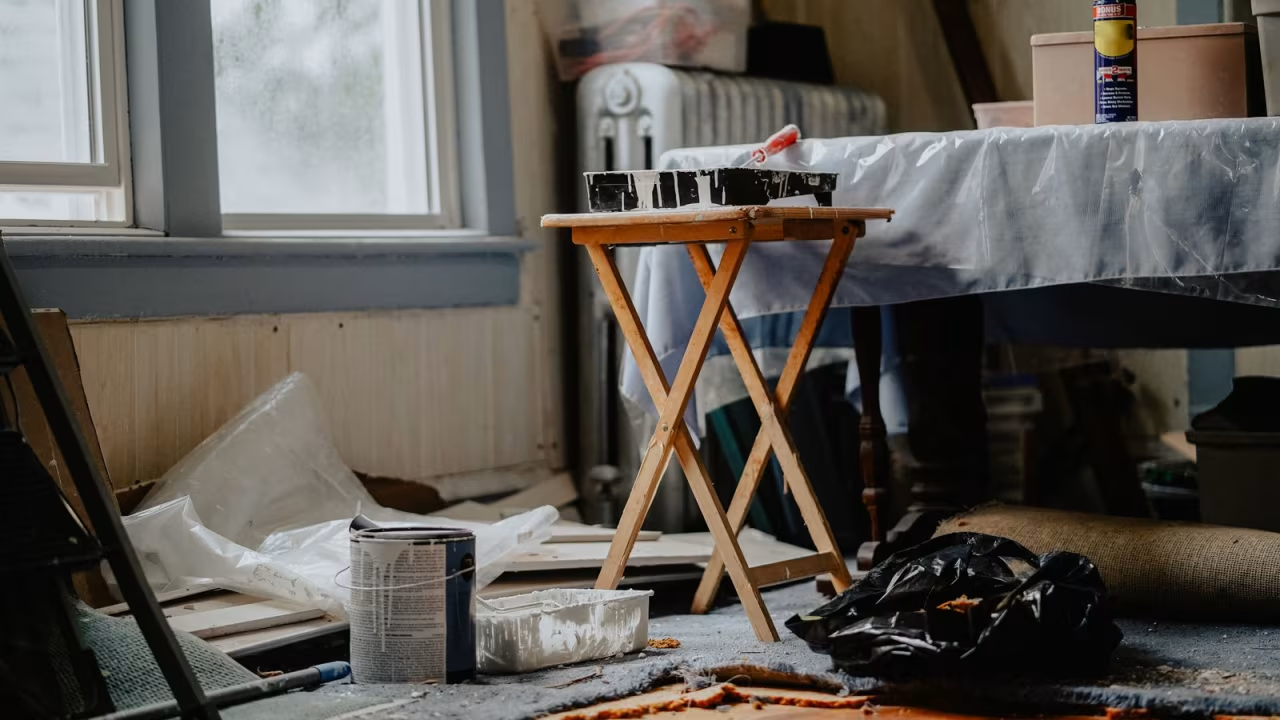
What that means in practice is narrow and specific. Nothing has to be fixed, cleaned or cleared before we look at the house. Belongings can stay. A room you have not opened in two years can stay shut until closing.
You send the address and tell us roughly what is wrong. We look at the property, in person or over a video call. We come back with a number in writing and how we reached it.
We are not a brokerage and we do not list houses. On a property that is structurally sound and simply dated, an agent will most likely get you more, even after the repairs a buyer’s inspection will ask for. You can read who we are on our local Kansas City property specialists page before you tell us anything.
What working with us looks like
- A written offer showing how the number was reached
- No repairs, no cleaning, no cleanout, no staging, no showings
- We look at the code and permit position and tell you what we find, whether or not you sell
- Proof of funds on request, which is worth asking of anyone who makes you an offer
- If listing would net you more, we say so
Can you sell a house in Kansas City with open code violations?
Yes. Open violations do not stop a sale, and they are not something you have to clear first. What they do is attach a growing cost to the property, and on the Missouri side that cost can end up billed to you personally rather than absorbed by the buyer.
What does the Dangerous Buildings List actually do?
Kansas City, Missouri publishes its current list of dangerous buildings online and updates it roughly weekly, so you can look your own address up before you speak to anyone.
Where a property is on it, the city weighs the age of the case, the severity of the damage, how close the building sits to parks, schools and major streets, and how likely a repair is. From that it decides whether to pursue the owner for compliance or to demolish.
Where it demolishes, a licensed contractor does the work and the city bills the owner for the expense. That is the part that matters to a seller. Left alone, a distressed Missouri house can stop being a house and become a bill.
What about work that was never permitted?
Unpermitted work is common on older houses and it usually surfaces during title work rather than at the walk-through. It does not prevent a sale to a buyer paying cash, but it can block a lender from financing a retail buyer, which narrows who can buy the property at all.
Tell any buyer about it early. A buyer who finds it late renegotiates. A buyer who is told at the start prices it once and does not come back.
How do you work out whether a repair is worth doing?
Compare what the repair adds to the sale price against what it costs to do, then add the months you carry the house while the work runs. On cosmetic work the answer is often yes. On structural work, on a house you are already struggling to hold, it usually is not.
How do you tell the difference?
Price the work properly, from a contractor rather than an internet estimate. Then ask an agent two questions: what the house is worth finished, and what it is worth today as it stands.
The gap between those two numbers is what the repair is worth to you, and it is frequently smaller than the repair bill. Then add what it costs to hold the house while the work happens, because that belongs on the repair side of the comparison and nowhere else.
Work Out Your Own Number
| Label | Value |
|---|---|
| Contractor quote for the work | your quote |
| Agent’s valuation of the house finished | your figure |
| Agent’s valuation of the house as it stands today | your figure |
| Monthly holding cost, times months of work | mortgage, taxes, insurance, utilities |
| What the repair is worth to you | finished value, minus today’s value, minus the quote, minus holding |
Why does foundation work come up so often here?
Much of the Kansas City metro sits on expansive clay soil, which swells when it is wet and shrinks when it dries. Over decades that movement shows up as settlement, cracking and doors that stop closing.
Piering and underpinning are the usual remedies and they are expensive. They are also the repair a retail buyer is most likely to demand before closing, which is why houses with visible settlement so often end up sold to a cash buyer instead.
What are your options for a house that needs work?
| Option | Best fit | What to know |
|---|---|---|
| Repair it, then list it | Cosmetic or moderate work, money available to fund it, and time. | Normally the highest sale price. You pay for the work up front, carry the house while it happens, and take the risk that the finished value does not cover what you spent. Get a contractor quote and an agent’s finished valuation before committing. |
| List it as is with an agent | A house that is dated rather than failing, and a seller who can wait. | Reaches the widest buyer pool, including buyers who will do the work themselves. Expect repair requests after the inspection even on an as-is listing, and expect financed buyers to fall away if a lender objects to the condition. |
| Sell direct to a cash buyer | Structural problems, code violations, a cleanout nobody wants to do, or no money to fund repairs. | Below what the house would fetch finished. No repairs, no cleaning, no showings, and no lender to satisfy. Ask for the arithmetic behind the offer and for proof of funds. |
| Do nothing for now | Rarely the right answer on a property that is deteriorating. | The condition worsens, and on the Missouri side a property can move onto the city’s dangerous buildings list. Where the city carries out a demolition, it bills the owner. |
The parts people leave out of the first phone call
“I am embarrassed by the state of it.”
This is the most common thing we hear and it stops people from calling for months. Nobody who buys houses in this condition is surprised by one, and the state of the house does not change how the conversation goes. Describe it out loud once and it gets smaller.
“There are rooms I have not opened in years.”
Then leave them shut. You do not have to go in, empty them, or know what is in them to get an offer. If you would rather not be there at all when the property is looked at, say so and it can be arranged.
“I cannot afford to fix it and I cannot afford to keep it.”
That is the position most people on this page are in, and it is worth saying to whoever you talk to. It rules out repairing first, which narrows the decision to two routes and makes it quicker rather than worse.
“I think there is something wrong I do not know about.”
Probably, on a house of any age. You are only responsible for disclosing what you know, and you are not expected to investigate your own house before selling it.
“I got a letter from the city and I put it away.”
Open it, and find the date on it. A city letter is a timetable rather than a verdict, and knowing which stage you are at changes what your options are. It also changes what an offer should look like, so bring it to any conversation.
“Somebody told me the house is only worth the land.”
Maybe, and maybe not. That is a valuation question and it deserves a real answer with arithmetic attached rather than an opinion at the curb. Get it in writing from whoever says it.
How to sell a house as is in Kansas City, in three steps
| Step | What happens | What you get |
|---|---|---|
| 1. Send the address | Tell us where it is and roughly what is wrong. If there is a letter from the city, mention it. If you do not know what is wrong, that is a normal answer. | A conversation with nothing attached, and a straight view of whether selling is your best move. |
| 2. We look at it as it stands | In person or over a video call. Nothing gets cleaned, cleared or fixed first, and nobody needs to walk us through a room you would rather avoid. | A written offer with the arithmetic shown, and anything we spot about permits or code position. |
| 3. Compare it and decide | Take the number to an agent and to a contractor. If repairing and listing beats us, do that instead. | A figure to measure the other routes against, at no cost. |
Find out what it is worth as it stands
Written, with the arithmetic shown, and nothing owed either way.
Is it better to repair the house first or sell it as it stands?
Repairing wins where the work is cosmetic, funded and quick. Selling as is wins where the work is structural, the money is not there, or the property has a municipal problem attached to it that gets worse while you organize contractors.
| What changes | If you repair first | If you sell as is |
|---|---|---|
| Sale price | Higher, and sometimes by more than the work cost. | Lower, and that discount is the trade for not doing the work. |
| Money out of pocket | Contractor deposits and the full cost of the work, before any sale. | None. |
| Time | The work, then the listing, then the sale. | One transaction. |
| Who can buy it | Anyone, including financed retail buyers. | Cash buyers and investors, which is a smaller pool. |
| Risk | The finished value may not cover what you spent. Work overruns are yours. | The condition risk transfers at closing. |
| A municipal matter attached to the property | Continues while the work is scheduled and carried out. | Ends at closing, along with your ownership of it. |
Here is the concession. If the house is structurally sound, you can fund the work, and you are not under any time pressure, repair it and list it. You will very likely end up with more money than we would pay you, even after the cost of the work. The case for selling as it stands is about the money not being there, the problem being structural, or the city already being involved.
Where do you buy houses in any condition?
Across the metro and on both sides of the state line. Missouri side: Jackson, Clay, Platte and Cass counties. Kansas side: Johnson, Wyandotte and Leavenworth counties.
Missouri: Kansas City, Independence, Blue Springs, Lee’s Summit, Raytown, Gladstone, Parkville, Raymore. Kansas: Overland Park, Lenexa, Shawnee, Olathe, Leavenworth, Kansas City, Kansas.
The dangerous buildings process described above is a Kansas City, Missouri program. Other cities in this metro run their own code enforcement, so which city the property sits in decides what applies to it.
Not sure which city or county the property is in? Call 816-895-2999 and we will check before anything else.
Call Now: 816-895-2999Local, Direct, Unbothered By Condition
What can you check about us before you call?
Four things you can verify without telling us anything about the house. If you want the wider picture first, read how we buy houses across the metro and decide afterward.
-
There Is An Office At A Real Address
124 Missouri Ave, Ste 202, Kansas City, MO 64106, open Monday through Saturday, 8 AM to 9 PM CT. Look it up before you describe your house to anyone.
-
Trading Here Since 2014
Rex Rodenbaugh started the business in 2014 and still runs it. How long a company has existed is something you can verify without asking it.
-
We Have Seen Worse
Structural movement, fire damage, a cleanout nobody wants to start. None of it is unusual and none of it changes whether we will look at the property.
-
We Check The Code Position And Tell You
If there is an open violation or unpermitted work, we say so. That is worth knowing whether you sell to us, list it, or keep it.
Frequently asked questions about selling a house as is in Kansas City
Do I have to clean the house or take anything out before I sell?
No. You can leave furniture, belongings and trash where they are, and you do not need to open every room. What you take with you is your decision and nothing has to be removed for a sale to complete. Tell the buyer what is staying so it is written into the contract rather than assumed.
Do I have to tell a buyer everything that is wrong with the house?
You have to tell them what the law requires and you must not conceal what you know. Missouri’s written duties are narrow and specific, and the methamphetamine disclosure at RSMo 442.606 is the one most often missed. You are not required to investigate your own property to find defects you do not know about.
Is Kansas different from Missouri on what I have to disclose?
Yes. Kansas has no general disclosure statute for a private sale, but its courts hold that a seller must be honest about the condition, and an as-is clause will not protect a seller who concealed a defect a buyer could not reasonably have found. Where an agent is involved, that agent must disclose adverse material facts they actually know. The Kansas Real Estate Commission publishes consumer guidance on disclosure and brokerage relationships.
Do I have to say that someone died in the house?
Not in Missouri. The statute states that a psychologically impacted property, which includes a death, a homicide, a suicide or a felony at the property, is not a required disclosure, and it provides no cause of action for failing to disclose it. Kansas has no equivalent statute, so speak to an attorney before you decide either way on a Kansas property.
Can you sell a fire damaged house in Kansas City?
Yes, and it is one of the more common reasons people call. What matters is whether the insurance claim is settled, whether any payout has already been released, and whether the structure has been assessed. Bring the claim paperwork to the conversation, because it changes what the property is worth to a buyer.
What happens if the city has already sent me a notice?
It does not prevent a sale. Kansas City, Missouri publishes its process and its current list at Kansas City Dangerous Buildings and Demolitions. The city weighs the age of the case, the severity of the damage, how close the building is to parks, schools and major streets, and how likely a repair is. Where it carries out a demolition, it bills the owner, so the notice is worth acting on rather than filing.
What if the house has been vacant for years?
Vacancy on its own does not stop a sale. Check two things first: whether your insurer has restricted or canceled coverage on an unoccupied property, and whether the city has opened a case on it. Both are easier to answer before you price the house than after you have agreed to a sale.
What if there is still a mortgage on it?
The payoff comes out of the proceeds at closing, the same as any other sale. Where the property is worth less than the balance, the lender has to agree to the sale, and that is a different conversation with a different timetable. Find out the payoff figure before you decide anything.
Do I need an agent to sell a house as is?
No. You can sell directly to a buyer without listing. An agent brings marketing reach and negotiation, and is often worth the commission on a house that is dated rather than failing. Licensing and agent conduct in Missouri are handled by the Missouri Real Estate Commission.
Will a buyer’s inspection kill the sale?
A cash buyer does not need a lender to approve the condition, so there is no appraisal or loan condition to fail. Some buyers still inspect for their own purposes, and a buyer who tells you they will not look at the property at all before quoting is not giving you a serious number.
Why is a cash offer lower than what the house would sell for finished?
Because the buyer takes on the repairs, the holding costs while the work runs, and the risk that the work costs more than expected. The margin has to cover all three before there is anything in it. That is also why, on a house that only needs cosmetic work, repairing and listing usually beats selling as is.
Have another question? Call 816-895-2999
Send the address before you decide anything
You do not need to know what is wrong with it. You do not need it clean, empty or safe to walk through, and you do not need to have opened the letters. You do not need to have decided that selling is the answer.
Nothing is owed for asking. You get a number in writing with the arithmetic shown, and a straight answer about whether repairing and listing would leave you better off. If it would, that is what we will tell you.